
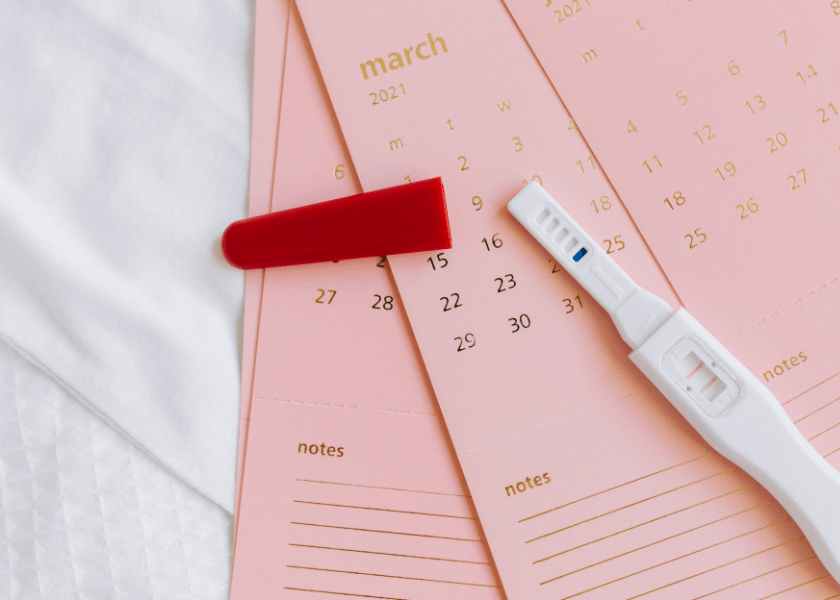
Last year, when my husband and I decided we were ready to start a family, I assumed it might take months—maybe even a year. But to our huge surprise (and relief), I got pregnant after just a month of trying.
We were incredibly lucky to have gotten pregnancy within the first month of trying. While luck played a big role, we also made several lifestyle changes that may have contributed to a healthy body. I want to share them in case they could help you too.
Everyone’s body and health condition vary. What worked for me might not work for you, so please take everything below with a grain of salt.
1. Stopping birth control early
I had a Mirena IUD for about a year and a half. I asked my OB/GYN to take it out about six months before we were ready to start trying, because it was causing me a lot of painful acne and I just couldn’t do it anymore. After my IUD was out, we used condoms for another six months before we started trying.
Looking back, that timing was likely a smart choice.. Even though my OB said we could start trying right away, it took my body several months for my cycle to regulate.
2. Taking prenatal vitamins in advance
It’s hard to know how much role the prenatal vitamins played a role in helping us conceive quickly, but it certainly didn’t hurt. I got the NatureMade Prenatal Multi + DHA (200 MG DHA) two-pack from Costco, and it seems like a lot of OB offices recommend this one too. As I mentioned, I started taking one pill a day about six months before trying, and I am currently about 2/3 of the way into the second bottle.
3. Prioritizing a high-fiber diet
During my annual physical about three years ago, I found out that my hemoglobin A1C (HbA1c) test was very close to the elevated level. My doctor said that it’s very common among Asians because we eat fine grain rice and noodles as as much as three times a day as our main diet. My husband and I were also eating a lot of bread for breakfast and making desserts on the side as we binged through the Great British Bake Off during COVID. She suggested that I incorporate more fiber into our lives, thus we made the following dietary changes:
- We swapped out white rice to brown rice completely. It took some getting used to, but we quickly adapted.
- We cut out bread from our breakfast and started eating steel cut oats instead. We use Bob’s Red Mill steel cut oatmeal, cook them in a rice cooker overnight, and add toppings like berries, nuts, or peanut butter. (I also enjoy canned sardines on the side—unconventional, but tasty!)
4. Cutting down on alcohol
I have a low alcohol tolerance and often get the “Asian glow” after just a few sips of wine. Given the growing research showing that no amount of alcohol is truly safe for health, my husband and I decided to cut out 99% of alcohol from our daily lives. This meant:
- Only having occasional sips if a friend brought a special bottle.
- No more ordering alcohol at restaurants. (Saves money too!)
I’m not sure if cutting alcohol helped our TTC (trying to conceive) journey, but it certainly didn’t hurt.
5. Maintaining an active lifestyle
Before trying to conceive, I was in good shape. My husband and I trained for our annual high-altitude backpacking trip to Yosemite for half a year, which involved:
- My husband running 3-4 times a week.
- Strength training and cardio workouts.
- Hiking with weights to build endurance.
- Indoor rock climbing 2-2 times a week.
6. Keeping a consistent sleep schedule
For the past few years, we have maintained a fairly consistent circadian rhythm:
- Bedtime between 10:30-11 PM.
- Wake-up time around 6:30-7 AM.
- We never stay up past 11 PM by choice (except for the occasional bout of insomnia).
A well-regulated sleep schedule keeps your body balanced, which may contribute to overall reproductive health.
7. Limiting processed foods and unhealthy fats
We switched to using only avocado and olive oil for cooking about three years ago.
These cooking oils are sources of monounsaturated or polyunsaturated fats. Research has shown that unsaturated fat helps lower the risk of heart disease.
Yes, they are a lot more expensive than those highly refined vegetable oil, such as corn, canola soybean oil. But because it’s something we eat every single day, we want to make sure the cooking oil we consume is not actively harmful. Read more about cooking oil here.
8. Getting that morning sun
Two years ago, a friend told us about the Andrew Huberman’s concept of using sunlight to adjust your circadian rhythm to help get better sleep at night and to improve your overall mental health. We started doing that whenever it’s possible, even just for 5-10 minutes in the morning, and we started to notice to a pretty stark difference in our sleep quality and overall mental well-being. Especially during remote work days, we try to step out and take walks under the sun when we remember. Remember, when you are sleeping better and have a better mental state, your body will be happier and will increase your chance of getting pregnant.
Final thoughts
What worked for me this time doesn’t mean this will work for me for my next pregnancy. Making sustainable lifestyle changes takes time, and the habits I developed weren’t just for conception—they have improved my overall health. Whether you’re trying to conceive now or simply working towards a healthier lifestyle, small daily changes can make a big difference.
Be gentle, patient, and kind to yourself.
 Roots & Wings
3 responses to “Lifestyle Changes for a Healthy Conception: What Worked for Me.”
Healthy lifestyle is good for everything. Congratulations 👏
LikeLike
Thank you, Priti!
LikeLiked by 1 person
You are welcome 🤗. https://notionpress.com/write_contest/details/637/tiger. I have taken part in a short story competition please support me with 50 points through the link. Today is the final day 😊🙏
LikeLike